

“Can AI really write like me?”
If you’ve ever worked with AI on any kind of writing, you know the feeling all too well. It misreads what you meant, or it polishes your words into something you’d never say, sprinkled with the AI-ish phrases we’re all running away from.
And the real deal breaker? It can’t read your mind (how frustrating, I know!). So you spend hours explaining your thinking before it gives you something you’d send to someone or publish.
So… can AI really write like you?
My answer is YES. And you don’t have to take my word for it, because I’m about to prove it on my own writing.
To do that, let’s take a step back and look at what AI needs to write like you. It comes down to two things.
1. It needs to know your voice.
Your voice is a huge part of what makes writing sound like you.
If you’ve been reading me for a while, you probably have your own Voice DNA skill already. If you don’t, you don’t know what you’re missing.
The article where I showed you how to build your own Voice DNA skill, along with the other skills that became the foundation of my digital existence, is one of my most appreciated (and most profitable) articles ever.
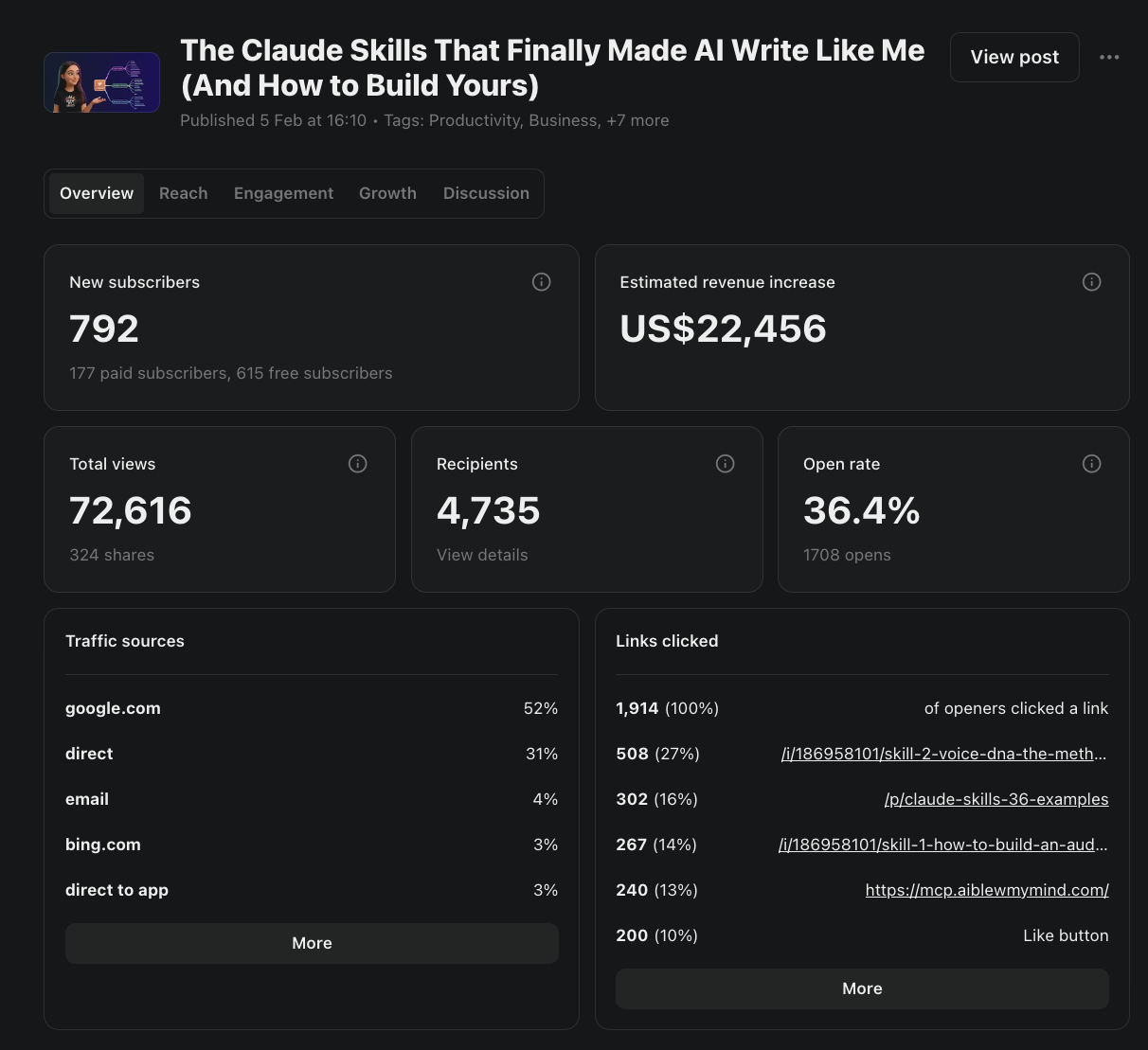
But what means the most to me is what people told me after building it. I got dozens of messages, and they all said the same thing: AI finally writes like them.
One of my favorites came from Kim Doyal, in the video testimonial she recorded for the AIBMM 1-year anniversary:
Still, eight or nine months into using my own Voice DNA, I kept feeling there was a big leak in my process.
Even when a draft was 90% in my voice, I was still spending a whole LOT OF TIME turning the version AI wrote into a finished piece I could publish.
So what was missing, if the Voice DNA was doing its job?
The hours went into rereading. Every time I read the polished AI version of my brain dump (aka my first draft), my brain would light up. I’d spot better connections and a more natural order for the whole piece. I’d catch gaps that would leave you confused, and new ideas would come to me that simply weren’t there when I started.
That rereading is where the real work happens. It’s where the page finally catches up with what I meant, and each idea gets pushed deeper until it says something worth reading. And if a line doesn’t help you understand or do something, it goes.
Almost none of this was about voice. It was about the thinking behind my writing, and that was the Voice DNA’s fundamental gap: it never taught AI any of it.
Here’s how Claude summed it up:

That was the missing piece of the puzzle. My voice was only half of what AI needed to write like me. The other half was how I THINK.
2. It needs to think like you
That’s the second pillar, and it’s what we’re building today: a skill that teaches AI how you think and how you take a draft to its final version.
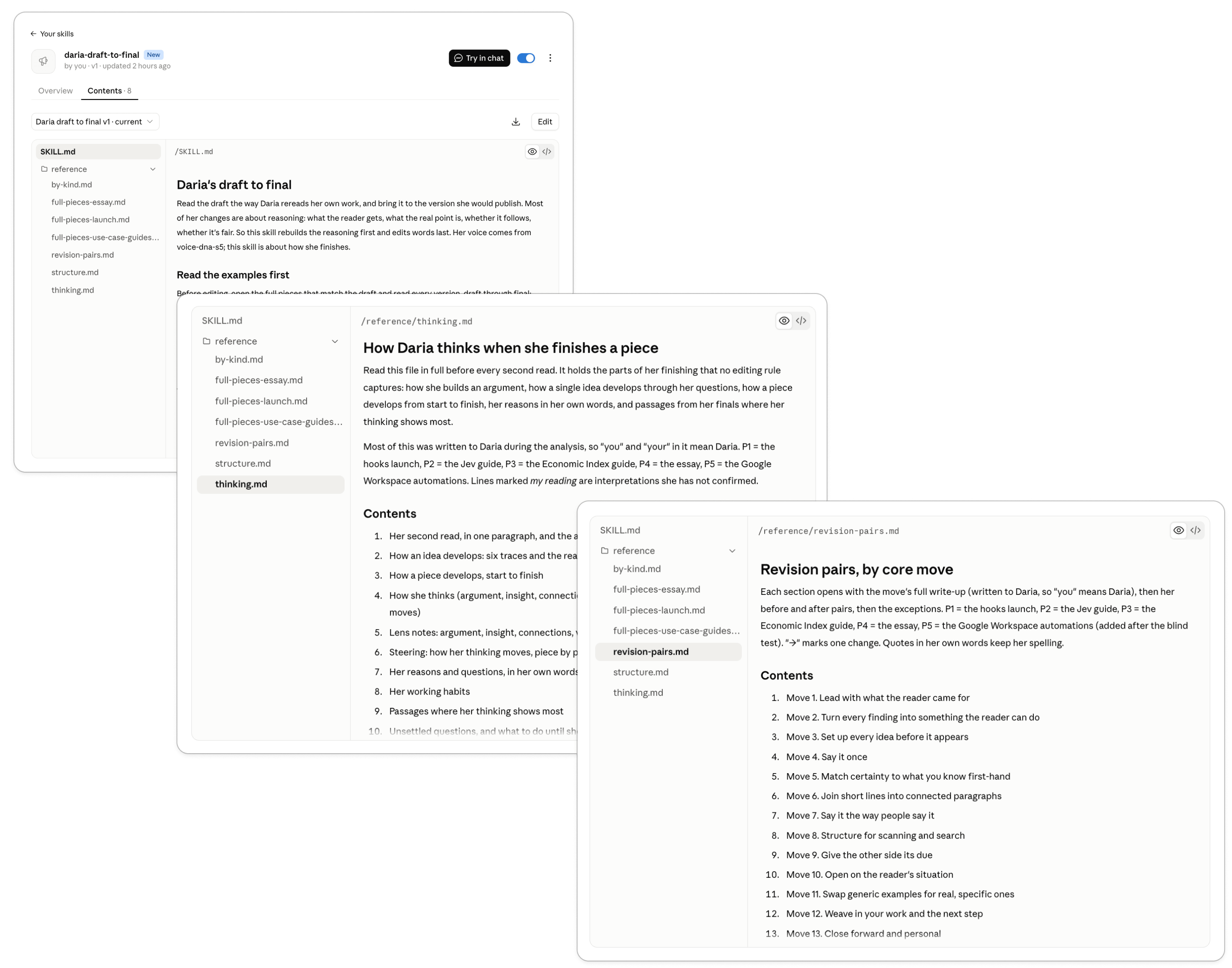
So if you spend hours going back and forth on your ideas and correcting AI every time it misreads what you meant, and you’d love to get that time back, this is for you.
By the end, you’ll have the full set: your Voice DNA and your own Draft to Final skill.
Together, they handle any kind of writing you throw at them, from articles and social posts to cold DMs, emails and ads.
Before we get to the how: the proof I promised
Once I built the second skill (the same one you’re about to create today), I had Claude run a blind test on it.
I picked my 30 Google Workspace Automations You Can Run With Claude (+ Prompts) article. I’d written it the usual way: I gave AI my own draft, AI turned it into a polished first version, and I reworked that version into the article I published.
For the test, the skill got only that first AI version. It never saw my edits or the published article, and it hadn’t learned from this article while it was being built. Its job was to finish the draft the way I would, so I could compare its version with mine.
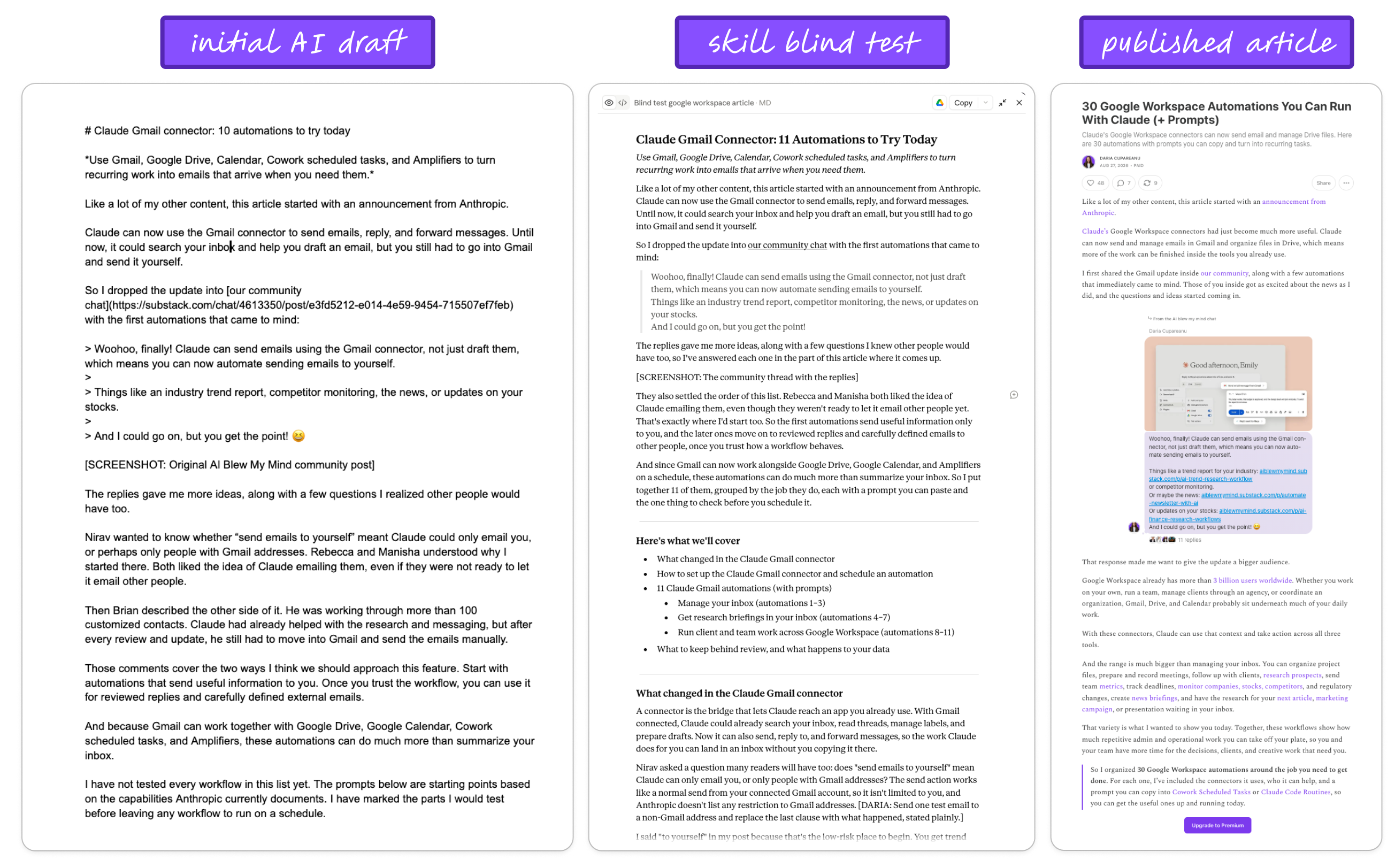
I know you wouldn’t read all three versions to compare them if I gave them to you, so I asked Claude to break down the blind test and its results:
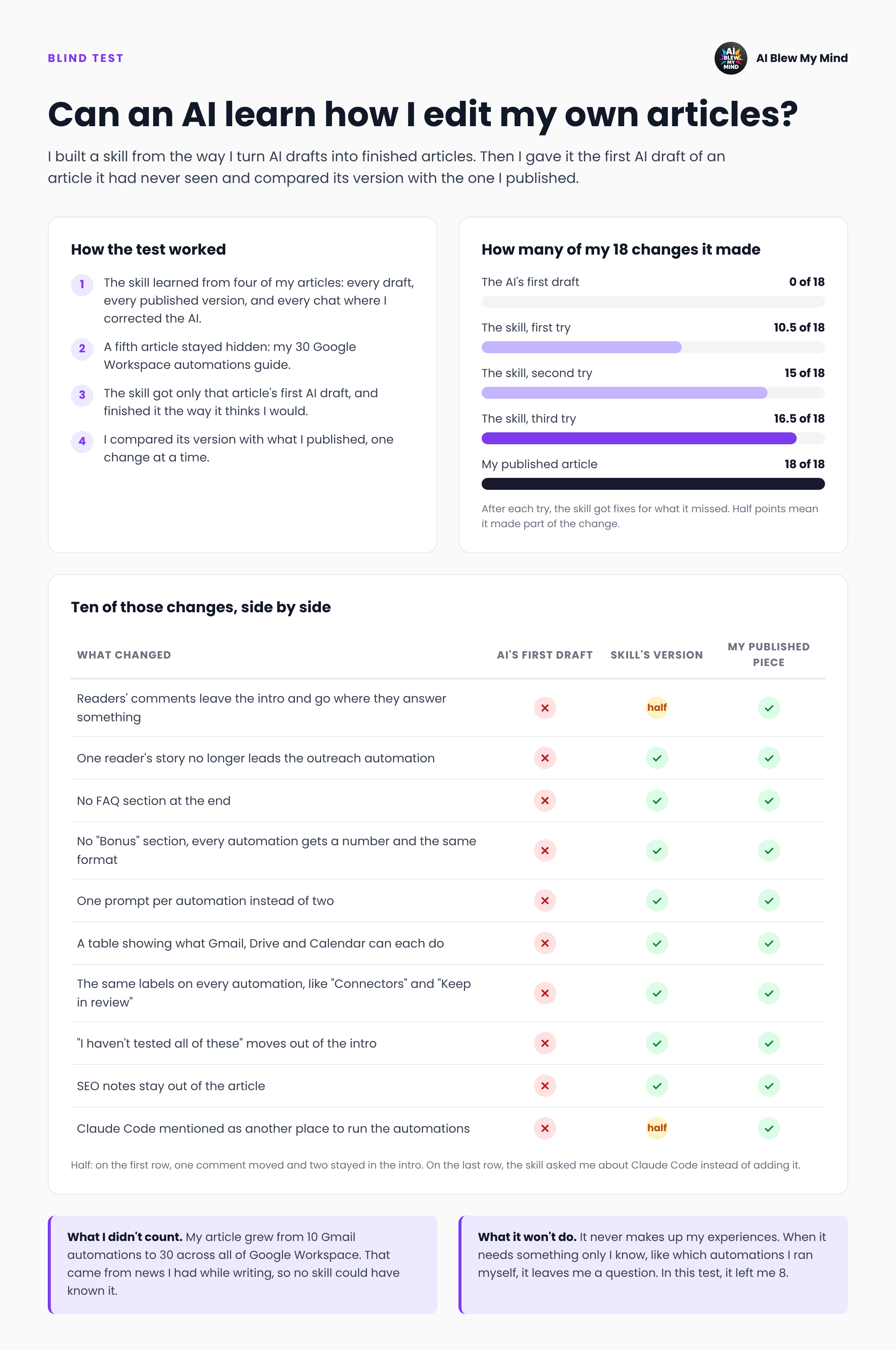
It’s not 100% there. As long as you put your heart into your writing, you stay part of this process. But gosh, it’s crazy close, and miles ahead of that first AI draft, which was far, far away from the piece I published.
Without further ado, now that you’ve seen what it’s capable of, let’s begin.
Let’s end the AI writing struggle for good. If you want to support my work, the only thing I’ll ever ask is that you share this article.
What you need before building your AI writing skills
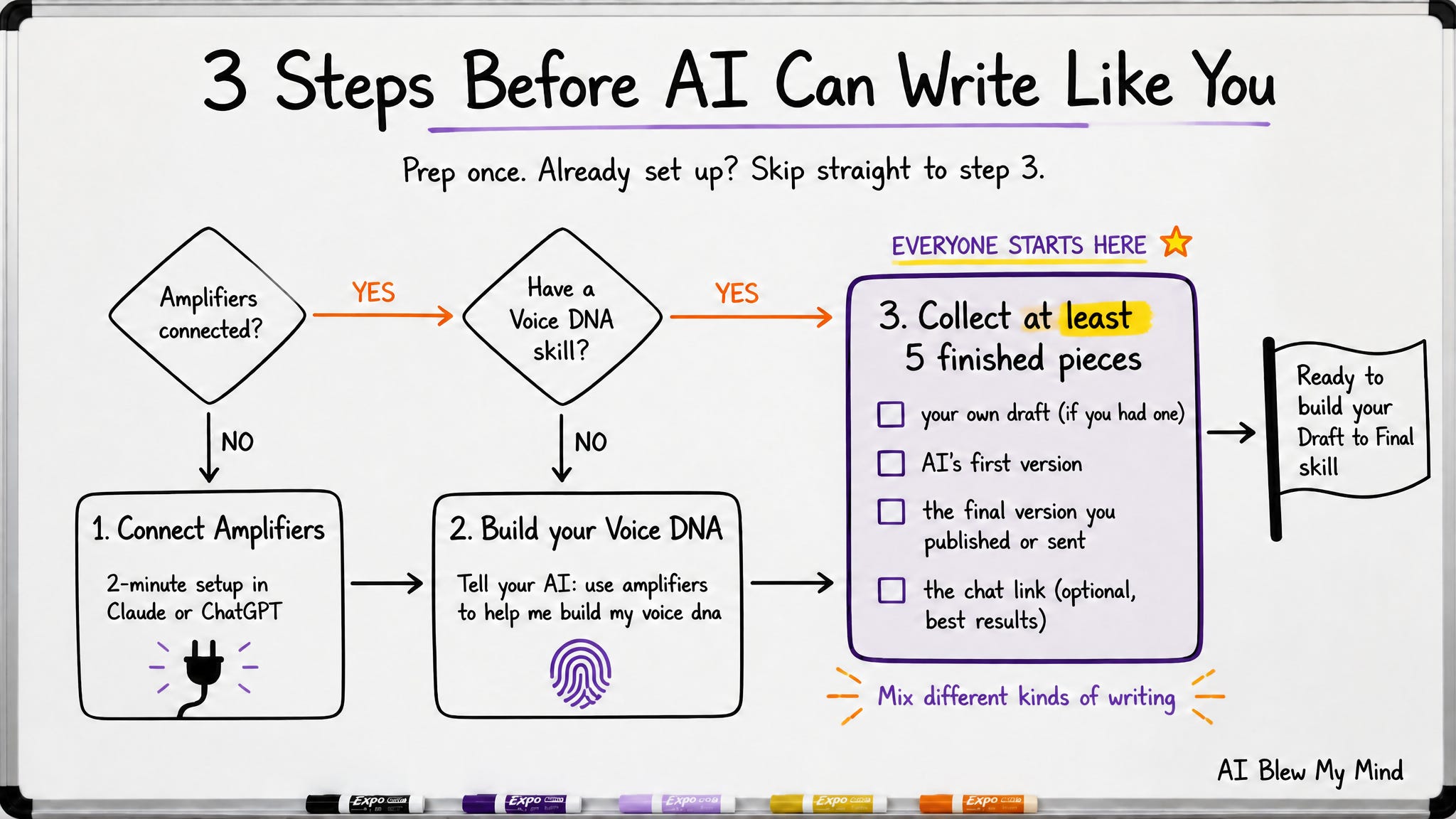
1. Connect Amplifiers to Claude or ChatGPT
Amplifiers holds the prompts that build both skills. The setup takes 2 minutes, literally: add it to Claude, ChatGPT or both (Gemini doesn’t support custom connectors yet).
Both skill builders are part of Amplifiers PRO, which comes with every paid subscription to AI Blew My Mind. If you’re on the free plan, upgrade here to use them.
2. Build the Voice DNA first (if you didn’t already)
Open a new Cowork, Claude Code or Codex session and tell your AI:
Use Amplifiers to help me build my Voice DNA.
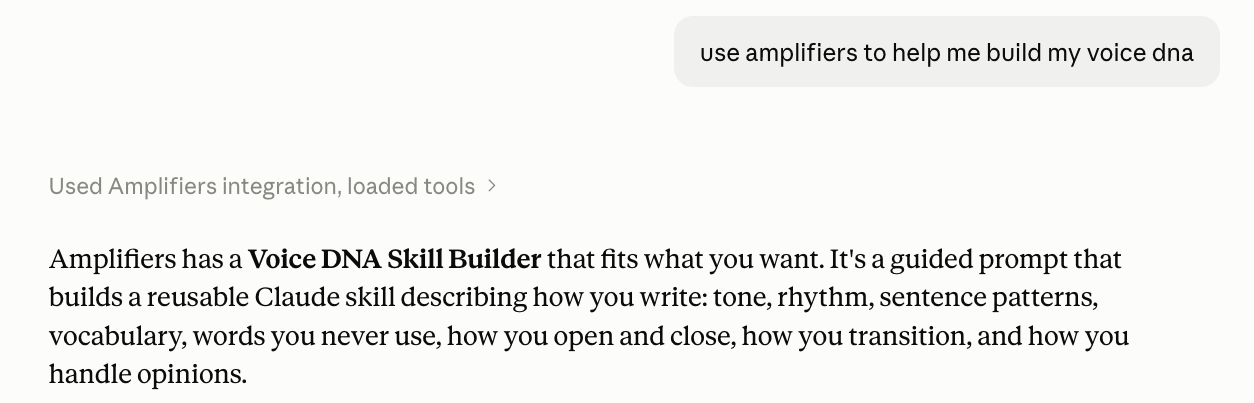
It walks you through the whole process step by step, including sharing around 5 pieces of your writing so it can map your voice. You’ll find more details in my article on it.
From here on, I’ll assume you have it, since today’s skill builds on top of it. And if you’ve had it for a while, today you also get to upgrade it.
3. Collect (at least) 5 writing samples with every draft and final version
This is the main (and most annoying) work, and the one step only you can do.
AI learns how you think by seeing how a piece changes from draft to final, so it needs every version. Go through your AI chats and pick at least 5 pieces you’ve finished. If you write different kinds of pieces, mix them in, since you probably rework each kind differently (mine were step-by-step guides, thinking pieces and use-case lists).
Then save these for each piece into a single doc (I used Google Docs):
Your own draft, if you started from one
AI’s first version, the draft or polish it gave you back
The final version you published or sent
A shareable link to the chat (optional, but it makes a huge difference!). It shows AI every correction you made and why, and that’s where your thinking shows the most.
That’s everything the Amplifier needs to dissect how you work and think. And I promise, the analysis will blow you away. It’s like reading a diary about you, written by someone who happens to live inside your brain.
How to make AI write and think like you in 2 steps
Now that we’re through the annoying part of collecting everything in a doc, let’s get to the fun part!
Step 1: Build your /Draft-to-Final skill with the Skill Builder Amplifier
This is the step that does the heavy lifting. The Draft to Final Skill Builder Amplifier reads your 5 pieces, analyzes how you write and think, and then builds your skill from that analysis.
The prompt behind it is massive. I spent days on it, testing and rewriting it trial after trial, because a quick analysis would only catch your word choices. This one looks at your writing through 18 lenses, including:
What you’re really trying to say, and how you get from what you meant to what ends up on the page
How you reason: where your ideas come from, the connections you make, and how you push an idea one level deeper
Where you change your mind: what you push back on when AI gets it wrong, and why
How you think about your reader: what they need first, what you cut, and how you make every part useful to them
How you build a piece: its order and structure, and how it grows from your brain dump to the version you publish
And yes, your voice: what AI still gets wrong, even with your Voice DNA
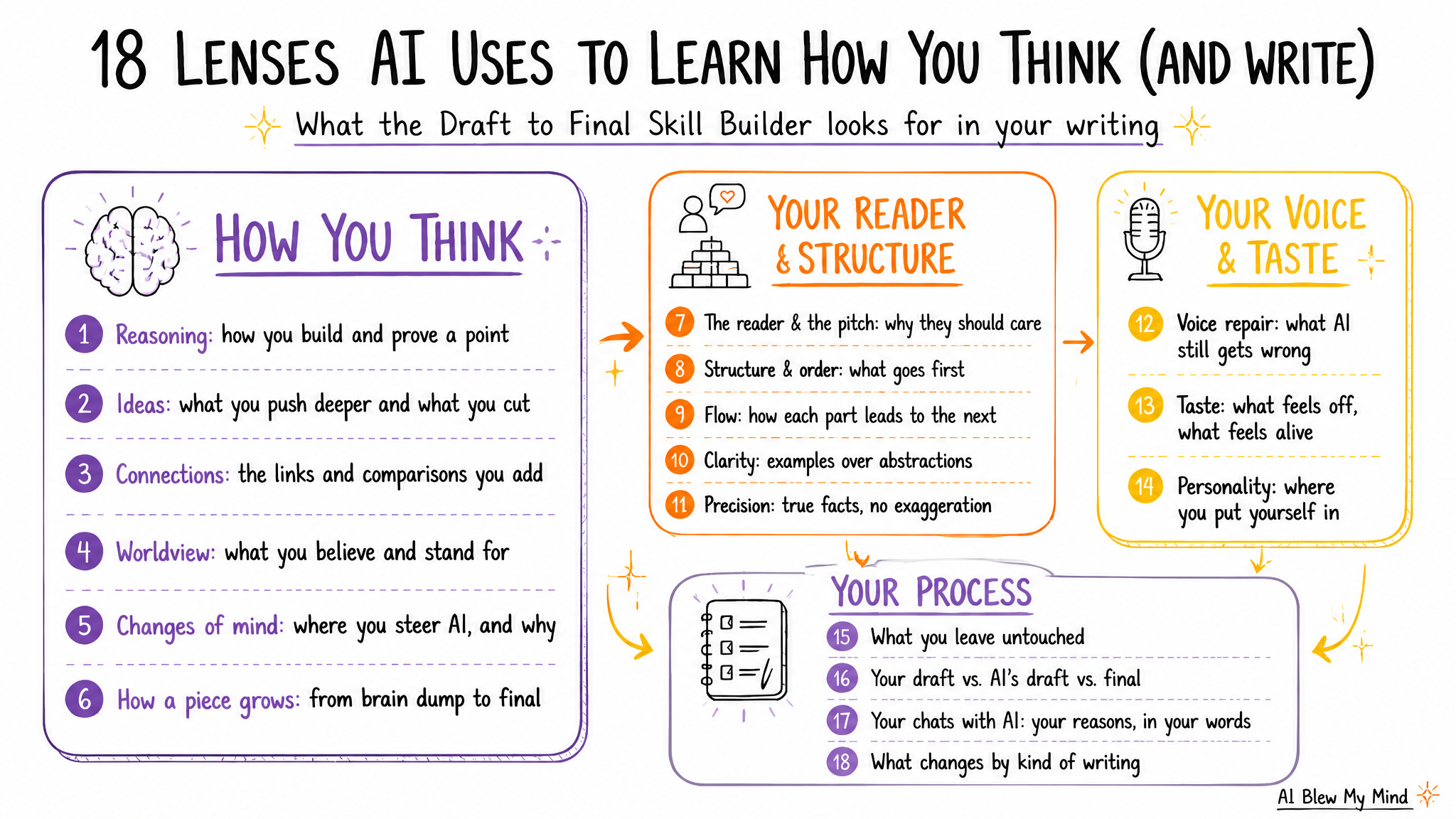
What you get back is a 10,000 to 20,000-word analysis of how you write and think, and the length is the least impressive part. Here are a few bits from mine:
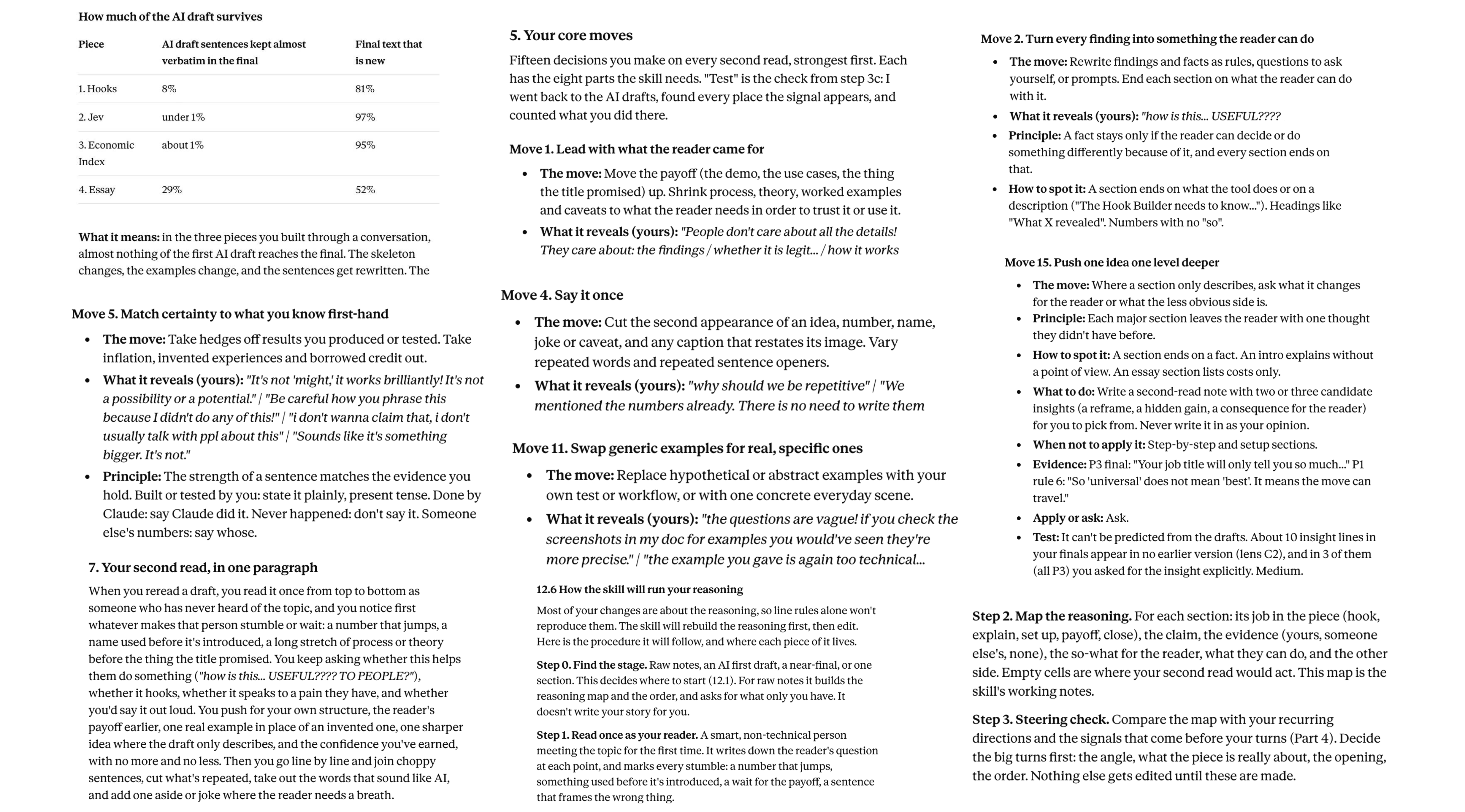
I know, it’s messy and a lot to read. But it gives you a glimpse of how deep it goes, and how closely it dissects the way I revise and think.
Then, once you approve the analysis, it builds you a skill like mine:
Your turn:
Open a new session and paste this, with the link to your doc:
Use the Draft to Final Skill Builder Amplifier and analyze my writing: [paste your doc]
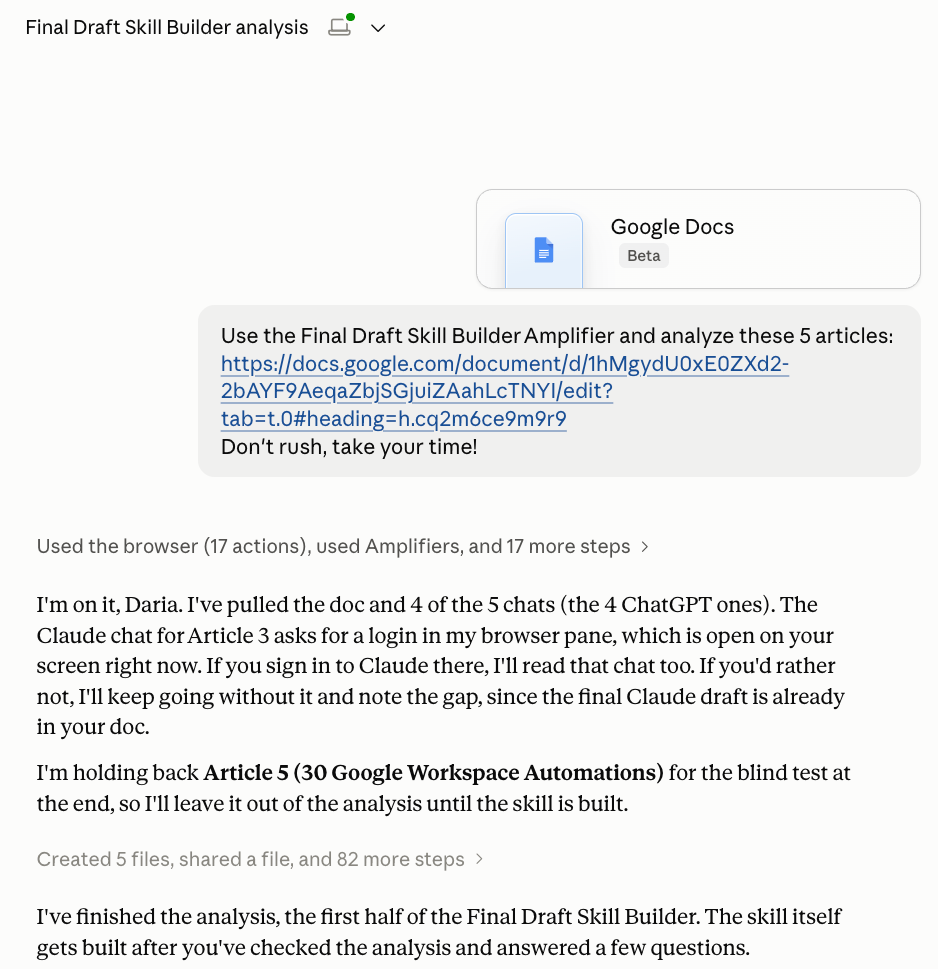
When it’s done, download the zip file, go to Customize → Skills, and upload it.
Step 2: Update your Voice DNA skill with the analysis
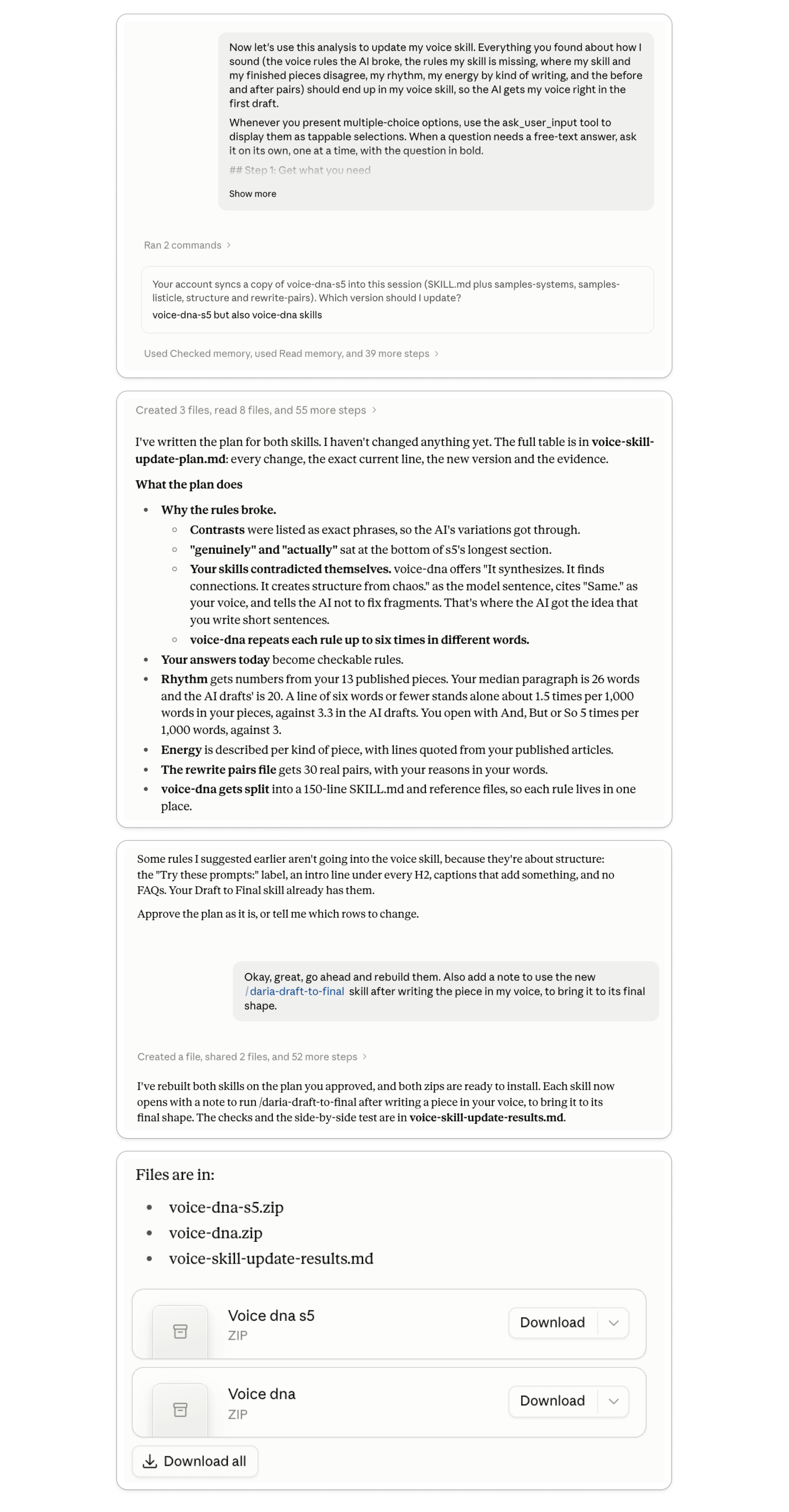
The analysis from Step 1 also found a lot about your voice: habits from your edits that your Voice DNA doesn’t capture yet.
Those findings belong in your Voice DNA. Keeping them there lets each skill do one job well: Draft to Final holds how you think and revise, and Voice DNA holds how you sound.
This works whether you built your Voice DNA today or have used it for months like me. A new one gets stronger from day one, and an older one gets fixed where it kept missing.
The prompt below plans every change first, checks with you on anything it’s unsure about, and only then rewrites your skill.
Your turn:
Paste this prompt into the same session where you ran Step 1: